
 © Shuvarthi Guha
Overview
The Sundarbans Delta programme’s area spans the Ganga delta in India, extending from the tide-dominated lower deltaic plain to the apex of the delta. It covers approximately 39,823 square kilometres across 10 districts of West Bengal. The lower deltaic plain encompasses the Sundarbans, the world’s largest contiguous mangrove forest with tigers as apex predators. The Ganges river dolphin and the gharial constitute the other flagship species in this programme area.
Discounting the city of Kolkata, the average population density in this geography is about 1,500 per square kilometre. The programme area supports a human population of about 60 million, which is predominantly agrarian. The lower deltaic plain is characterised by a significant development deficit and a strong dependence on natural resources, resulting in intense human–wildlife conflict.
Sundarbans is witnessing sea-level rise at a rate higher than the global average. The region is also affected by frequent extreme weather events due to rising sea surface temperature in the largest and relatively shallow bay, the Bay of Bengal. Hugli, the main river in the programme area, is part of the National Waterway-1, the busiest in the country. National Waterway-97, or the Sundarbans Waterway, serves as the India-Bangladesh Protocol route with significant river traffic. This high level of navigation adds ecological stress to an already fragile landscape.
Since the Ganga River Basin is the most human-modified and exploited in India, securing ecological connectivity and managing habitats of flagship species are pressing issues.
 © WWF-India
OUR WORK – Sundarbans Delta
Since 2005, WWF-India has developed partnerships with academic and research institutions for new knowledge, with government directorates and departments for adoption, and with community institutions for implementation. In the absence of suitable community institutions, WWF-India has promoted their formation. Partner engagement is an ongoing process, contributing to WWF-India’s work on conserving biodiversity and reducing footprint in the programme area.

KEY PILLARS OF OUR WORK:
- Tiger Population estimation:
The first All India Tiger Estimation (AITE) published by the National Tiger Conservation Authority (NTCA) in 2008 did not report tiger numbers from Sundarbans in the absence of a camera trapping exercise. WWF-India helped in developing an appropriate camera trapping methodology in 2011 in collaboration with the West Bengal Forest Directorate. This method was formally notified by NTCA in 2012 as the Monitoring Protocol for the Sundarbans - West Sundarbans Wildlife Sanctuary:
The presence of 20 tigers in the 24 Parganas (South) Forest Division was established using camera traps for the first time in 2013. This facilitated the creation of the largest sanctuary in the Sundarbans: the West Sundarbans Wildlife Sanctuary.
WWF-India has mapped the rivers of West Bengal to assess habitat suitability for gharials and river dolphins, in partnership with forest and transport directorates. In collaboration with the government partners, WWF-India will identify critical rivers for reconnection and rejuvenation.
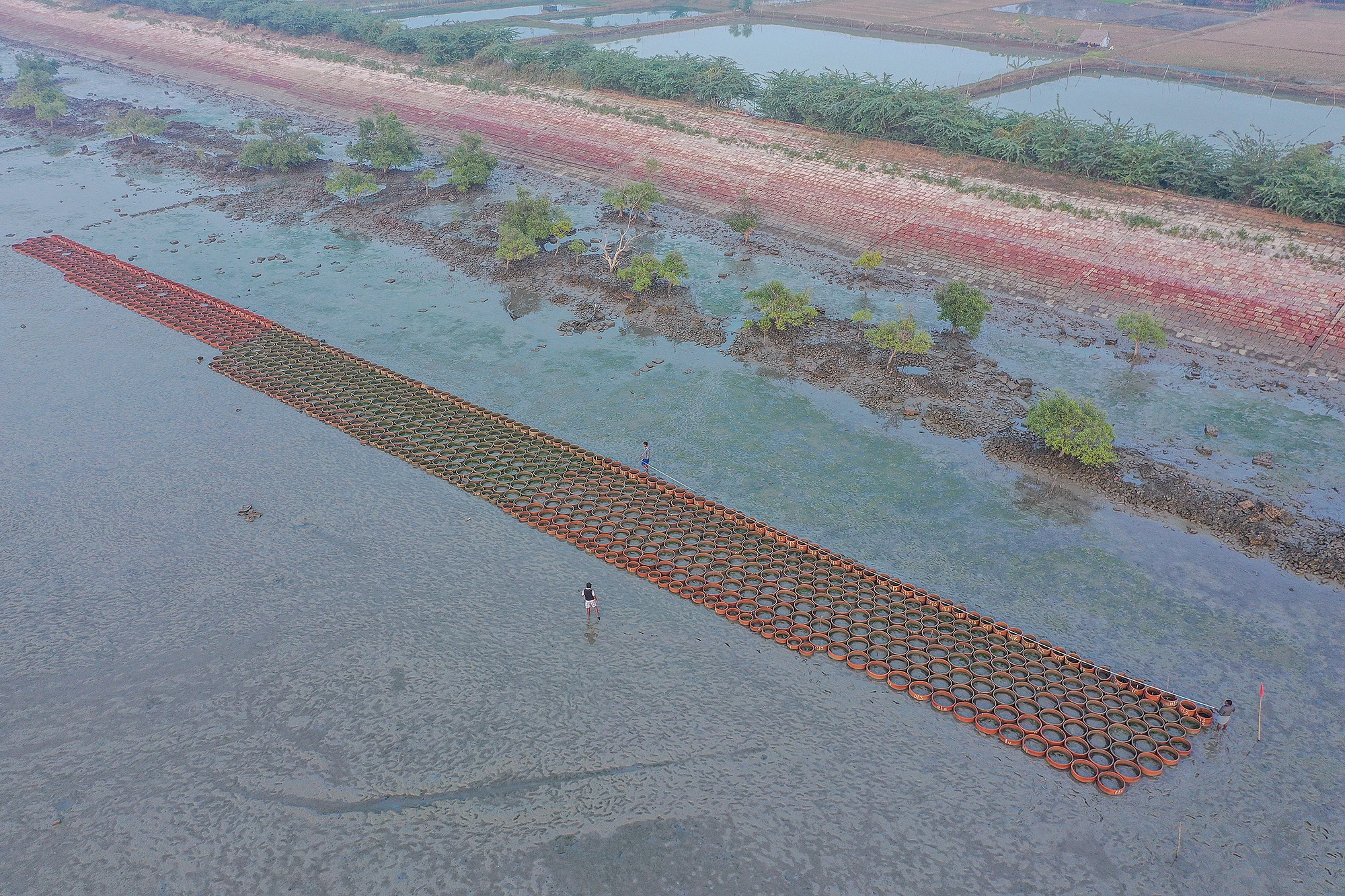
WWF-India works closely with state directorates and departments to demonstrate appropriate infrastructure for sustainable development. The Irrigation and Waterways Department has amended its manual to incorporate the demonstrated Nature-based Solutions (NbS) for the protection of banks and embankments in the Sundarbans. Building on its earlier experience of retrofitting diesel-powered three-wheelers with electric propulsion systems, WWF-India has demonstrated electrification of diesel-powered small watercrafts. The Non-conventional & Renewable Energy Sources (NRES) Department, Government of West Bengal, is keen to promote electric watercrafts in the Sundarbans and is collaborating with WWF-India to enable wider adoption of electric propulsion systems.
WWF-India uses a multi-layered approach to prevent and manage human-wildlife conflict in the Sundarbans Delta.
- Prokriti Bondhu (Friends of Nature): WWF-India started the Prokriti Bondhu initiative in 2022. This is a cadre of local volunteers in forest-fringe villages and along rivers who serve as the first responders during wildlife emergencies and as conservation ambassadors within their communities. These volunteers act as the main sources for crowd-sourced information on aquatic species and critical, real-time insights from the field.
- Behaviour Shift: The collection of wild shrimp seed not only caused significant ecological damage due to high bycatch, but also exposed forest-fringe communities to the risk of human–wildlife conflict. WWF-India worked closely with the Fisheries Directorate and aquafarmer groups to promote and demonstrate Better Management Practices (BMPs), including the use of PCR-tested hatchery-produced shrimp post-larvae (seed), improved pond preparation and water exchange, and responsible feed management in aquafarms that were primarily dependent on wild-caught shrimp seeds. As aquafarmers gained confidence in the quality and reliability of hatchery-produced post-larvae, demand for wild-caught seed from the Sundarbans declined. This transition has reduced disease incidence and crop losses, significantly lowered bycatch, and contributed to a decline in human–wildlife conflict.
- De-risking Livelihoods: Dependence on natural resources often intensifies in the aftermath of extreme climate events, leading to a rise in human–wildlife conflict. Paddy agriculture is adversely affected for several years in case of saltwater incursion during storms. WWF-India has reintroduced the Talmugur paddy variety, which has helped farmers meet subsistence needs despite recurring storms. Early efforts have ensured that Talmugur paddy is available in local markets, strengthening climate resilience at the community level. WWF-India has also promoted apiary-based forest honey collection and supported its marketing. In FY 2024-25, the honey cooperative/Agro Producer Company sold 45 tonnes of honey for INR 2.53 crores. The risks of human–wildlife conflict to the participating honey collectors is low, as apiary-based collection reduces the need to venture deep into forest areas.
 © shutterstock.com
Support Conservation
Your contribution helps us in protecting wildlife, restoring habitats and building a better future for people and nature.
Donate